
Most people who ask what is metabolic health expect an answer about weight. Metabolic health describes how well your body handles energy: how it manages blood sugar, moves fat through the bloodstream, and keeps blood pressure in a safe range. Clinicians check it with five measurements, and none of them is a number on the bathroom scale.
That matters if you are a woman in your 40s or 50s whose weight has been steady for years and who assumes that means everything is fine. A stable weight tells you very little about what is happening in your blood vessels, your liver, or your insulin response. The markers can drift in the wrong direction while your clothes fit the same.
Why a Normal Weight Does Not Mean a Healthy Metabolism
Body weight is the total of muscle, bone, water, organs, and fat. It does not show where the fat sits or how your tissues respond to insulin. Two women of the same height and weight can have very different metabolic profiles.
The location of fat is the key difference. Fat under the skin, on the hips and thighs, is relatively inert. Fat packed around the organs in the abdomen (visceral fat) is more active: it releases inflammatory compounds and fatty acids that make the body less responsive to insulin. Visceral fat can accumulate in people whose weight and BMI both fall in the normal range. Researchers sometimes describe this as being “metabolically unhealthy, normal weight.”
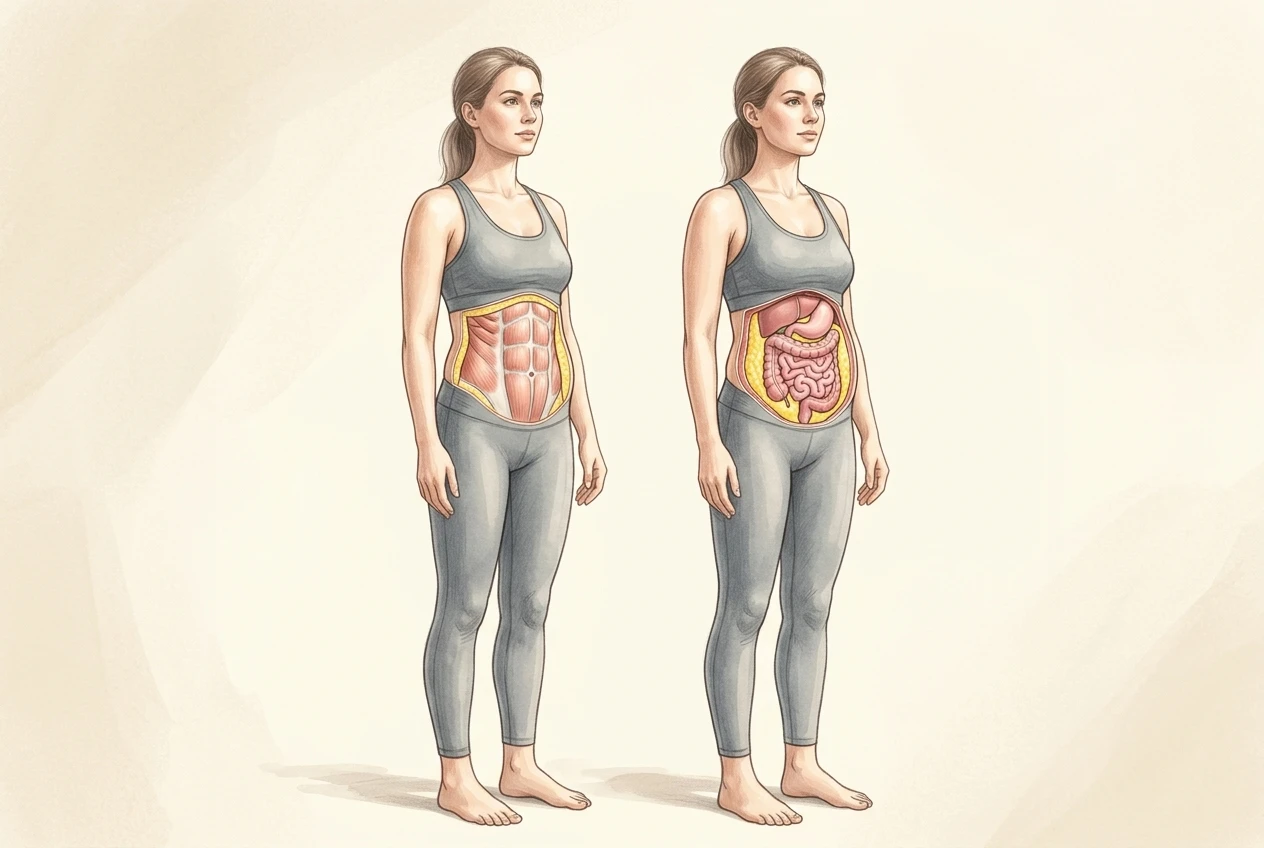
Midlife adds its own pressure. As estrogen declines through perimenopause and after menopause, fat tends to shift toward the abdomen even when the scale does not move. Muscle mass also falls gradually with age unless it is trained, and muscle is one of the main places your body disposes of blood sugar. You can lose muscle and gain visceral fat while the number on the scale stays put.
The reverse also holds. Some people with a higher body weight have healthy blood pressure, blood sugar, and blood lipids. Weight is one piece of information, and a poor stand-in for the measurements that actually predict disease.
The 5 Markers Clinicians Use to Define Metabolic Health
The five markers below are the same ones used to diagnose metabolic syndrome. A diagnosis of metabolic syndrome generally requires three or more of them to be outside the target range. The thresholds below are the commonly used cutoffs for adult women. Your clinician may use slightly different targets based on your history.
1. Fasting blood sugar
A fasting glucose of 100 mg/dL (5.6 mmol/L) or higher is flagged as elevated. Levels of 100 to 125 mg/dL fall in the prediabetes range, and 126 mg/dL or higher on repeat testing indicates diabetes. Your clinician may also order an HbA1c, which reflects your average blood sugar over roughly three months. A HbA1c of 5.7% to 6.4% is the prediabetes range.
2. Blood pressure
A reading of 130/85 mmHg or higher, or taking medication for high blood pressure, counts as a marker. Under 120/80 is considered normal. Blood pressure often rises with no symptoms at all, which is why it is called a silent risk.
3. Triglycerides
Triglycerides are a type of fat carried in the blood. A level of 150 mg/dL (1.7 mmol/L) or higher is flagged. High triglycerides are often linked to excess refined carbohydrates, alcohol, and insulin resistance.
4. HDL cholesterol
HDL is the cholesterol particle that helps carry cholesterol back to the liver. For women, a level below 50 mg/dL (1.3 mmol/L) is flagged. Here, a higher number is better.
5. Waist circumference
A waist measurement of 35 inches (88 cm) or more in women is flagged. This is a practical stand-in for visceral fat, and it is the only one of the five you can check at home with a tape measure.
Clinicians use these five because each reflects a different part of the same underlying problem. When the body stops responding well to insulin, several of them tend to move together: the waist grows, triglycerides rise, HDL falls, and blood sugar and blood pressure creep upward.
How Poor Metabolic Health Quietly Feeds Heart Disease, Type 2 Diabetes, and Fatty Liver
These markers matter because of what they predict. Each flagged marker raises risk, and several flagged together raise it considerably more. The conditions below tend to develop over years or decades, which is why catching the markers early is useful.
Heart disease. High blood pressure strains and stiffens artery walls. High triglycerides and low HDL are associated with the kind of cholesterol pattern that promotes plaque in the arteries. Elevated blood sugar can damage the lining of blood vessels over time. Heart disease is the leading cause of death in women, and the risk climbs after menopause. Many women still picture it as a men’s problem.
Type 2 diabetes. Insulin resistance usually comes first. The pancreas compensates by producing more insulin, which keeps blood sugar normal for a while. Eventually it cannot keep up, and fasting glucose and HbA1c start to rise. Prediabetes is the stage where this shows up on a lab report, and it is often reversible with changes in lifestyle.
Fatty liver disease. When the body is resistant to insulin, the liver accumulates fat. This condition, now called metabolic dysfunction-associated steatotic liver disease (MASLD) and formerly known as NAFLD, usually causes no symptoms in its early stages. In some people it progresses to inflammation and scarring.
These conditions share a root, so improving the underlying markers helps protect against all of them at once. That is what makes metabolic health such a practical target for prevention: the same changes in food, movement, sleep, and stress apply across the board.
Early Warning Signs People Dismiss as Normal Aging
The most important fact here is that metabolic problems often cause no symptoms. High blood pressure, rising triglycerides, and early insulin resistance can all be present while you feel fine. That is the main argument for measuring rather than waiting for something to feel wrong.
When signs do appear, they are easy to attribute to getting older or to menopause. These are worth mentioning to a clinician, especially if several appear together:
- A growing waistline with no change in weight or eating habits
- Energy crashes or sleepiness after meals, particularly after carbohydrate-heavy ones
- Strong cravings for sweets or refined carbohydrates
- Increased thirst or more frequent urination
- Darkened, velvety patches of skin on the neck or in the armpits, or an increase in skin tags
- Loud snoring or unrefreshing sleep, which can signal sleep apnea, a condition closely tied to metabolic problems
- Persistent brain fog or difficulty concentrating
None of these confirms a metabolic problem, and each has other possible causes, including those related to perimenopause. If you are navigating hot flashes, disrupted sleep, and mood shifts, the overlap can make it hard to tell what is what. The article on symptom management in menopause covers that transition in more detail. Whatever the cause, the lab numbers can clear up what symptoms cannot.
Which Numbers to Ask About at Your Next Checkup (and Where Affordable Testing Fits)
A routine physical does not always include every marker, and results are sometimes reported as “within normal limits” without the actual numbers. Ask for the values themselves, since a result at the edge of normal looks very different from one in the middle of it.
Here is a practical list to bring to your appointment:

- Fasting glucose and HbA1c. Ask for both, since they can disagree and each adds information.
- A full lipid panel, including triglycerides, HDL, LDL, and total cholesterol.
- Blood pressure readings, ideally more than one, and ask whether home monitoring makes sense for you.
- Waist circumference. Many offices do not measure it. You can do it yourself by wrapping a tape measure around your bare abdomen at the level of your navel, after a normal exhale.
- Liver enzymes (ALT and AST), which can hint at fatty liver when elevated.
Also ask about your family history, because a parent or sibling with early heart disease or diabetes changes how closely your numbers should be watched. And ask how often to repeat the tests. If everything is in range, that may be every year or two. If a marker is borderline, you may be advised to recheck sooner.
Cost keeps some people from testing. If your insurance does not cover everything you want, or you have no regular clinician, independent lab testing can fill the gap. The step-by-step guide to affordable blood testing is linked at the end of this article. Whichever route you take, take the results to a clinician who can interpret them alongside your history.
Daily Levers That Move the Markers: Food, Movement, Sleep, and Stress
The same handful of habits influences all five markers. None of them requires a dramatic overhaul. Consistency over months does most of the work.
Food
Meals built around protein, fiber, and minimally processed foods slow the rise in blood sugar after eating. Vegetables, beans, lentils, whole grains, nuts, and seeds supply fiber. Protein helps preserve muscle, which becomes more important with age. Cutting back on sugary drinks and refined starches tends to lower triglycerides, and limiting alcohol helps as well, because alcohol raises triglycerides directly. For a broader look at how needs shift across the decades, see the guide to nutrition needs for women at different life stages.
Movement
Muscle takes up glucose from the blood, so using it improves insulin sensitivity. Two kinds of movement are worth combining: aerobic activity such as brisk walking, and resistance training. General guidelines recommend at least 150 minutes of moderate activity per week and strength work on two days. Resistance training matters especially in midlife because it counters muscle loss. A short walk after a meal also tends to lower the blood sugar spike that follows. If you want ideas for building a routine, the piece on the benefits of a physical activity routine is a good place to start.
Sleep
Even a few nights of short sleep reduce insulin sensitivity, and chronic short sleep is associated with higher blood pressure and a larger waistline. Most adults need seven or more hours. Sleep disruption is common in perimenopause, so it is worth treating as a health priority rather than an inconvenience. Practical strategies are covered in improving sleep for health.
Stress
Chronic stress keeps cortisol elevated, which pushes blood sugar up and encourages fat storage around the abdomen. Stress also affects the other levers: it disrupts sleep, drives cravings, and makes exercise harder to fit in. Techniques such as slow breathing, time outdoors, and regular downtime reduce the physiological load. The science behind several of them is laid out in from chaos to calm.
A Realistic First Month: Three Changes Worth Making Before Anything Else
Trying to change everything at once usually fails by the second week. The sequence below starts with a baseline and adds one habit at a time, each chosen because it affects several markers.
Week one: get your baseline
Measure your waist and write it down. If you have access to a home blood pressure cuff, take readings at the same time of day for a few days. Book the lab work described above, or pull up your most recent results. You cannot judge progress without a starting point.
Change 1: Walk for 10 to 15 minutes after your largest meal

This is the easiest habit to start and it works on blood sugar directly. Begin in week one and keep it going through the month. If you already walk, move some of that walking to after meals.
Change 2: Build meals around protein and fiber
Starting in week two, aim to include a protein source and a fiber-rich plant food at each meal. This does not require eliminating anything. You are adding things, and the added food crowds out some of the refined carbohydrates that raise triglycerides and blood sugar. Replace sugary drinks with water or unsweetened tea where you can. If remembering to drink enough is an obstacle, there are some creative ways to increase your daily water intake.
Change 3: Set a consistent wake time and add two strength sessions
In weeks three and four, choose a fixed wake time and protect your sleep window around it. Add two short strength sessions per week, using bodyweight, resistance bands, or weights. Twenty to thirty minutes is enough to start. Both changes support insulin sensitivity, and strength training gives you a way to protect muscle through menopause and beyond.
After a month, you will have habits in place that influence every one of the five markers. Retest on the schedule your clinician recommends, usually after about three months, since blood sugar markers like HbA1c need time to reflect changes. Treat the first set of results as a starting line, and bring any flagged numbers to your clinician so you can decide together what else is needed. Medication is sometimes appropriate, and lifestyle changes work alongside it.
Knowing where your markers stand is the step that makes the rest actionable. Read the beginner’s guide to affordable blood testing so you can find out where your own markers stand.